
Concrete Patio Installation in Marrero
We install concrete patios for homeowners in Marrero and the surrounding West Bank. From simple slabs to decorative finishes, we pour patios that drain properly, hold up to South Louisiana's climate, and add real value to your outdoor living space.
20+
Years of Experience
450+
Jobs Done
4.9/5
Average Customer Rating
What Is a Concrete Patio and What Can It Do for Your Home?
A concrete patio is a poured slab installed directly on prepared ground in your backyard or side yard, creating a flat, durable outdoor surface for everyday use. Homeowners choose concrete patios when they want a low-maintenance outdoor living area that holds up to heavy foot traffic, outdoor furniture, and year-round weather exposure. Once installed, a concrete patio adds usable square footage to your home, increases property value, and eliminates the mud, uneven ground, and maintenance headaches that come with grass or gravel alternatives.
The benefits are immediate and long-lasting. A properly poured concrete patio gives you a level, stable surface that drains rainwater away from your home, resists weed growth, and requires nothing more than occasional cleaning to maintain its appearance for decades.
Who Needs a Concrete Patio and When Should You Install One?
Any homeowner with an underused backyard, a muddy outdoor area, or an existing patio that is cracked, sunken, or deteriorating is a strong candidate for a new concrete patio installation. It is also the right move if you are planning to add outdoor furniture, a grill station, a pergola, or any other structure that needs a solid, level base beneath it.
The consequences of putting it off are real. An unpaved backyard in South Louisiana collects standing water after every rain, accelerates soil erosion around your foundation, and limits how you can actually use your outdoor space for most of the year. An existing patio that is cracked or sinking will only get worse as water infiltrates the base and the ground beneath it continues to shift. Addressing it sooner rather than later almost always means a simpler job and a lower cost.
How a Concrete Patio Installation Works
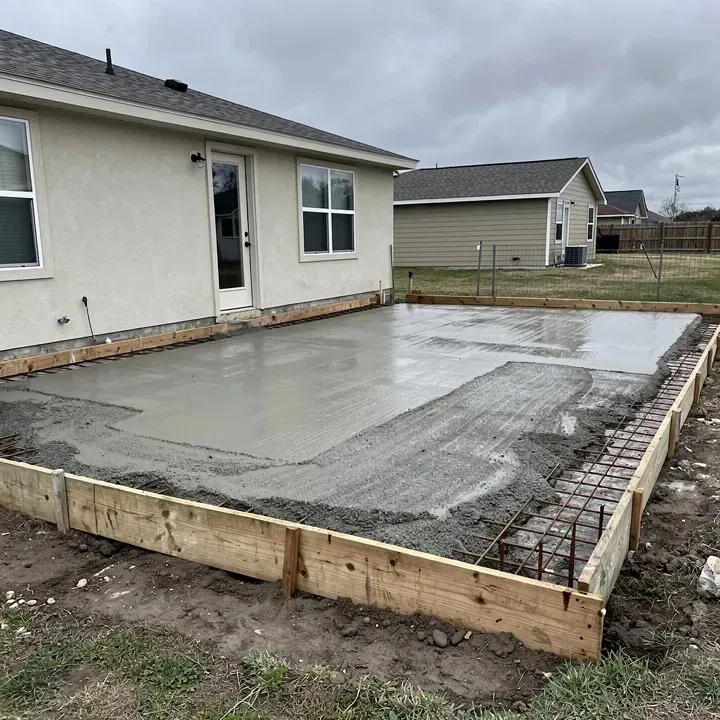
The process starts with a site evaluation to determine the right size, shape, drainage slope, and finish for your specific yard. The ground is then excavated to the appropriate depth and a compacted gravel base is laid to provide stable support and promote drainage beneath the slab.
Wooden or metal forms are set to define the shape and edges of the patio. Steel reinforcement, either rebar or wire mesh, is placed inside the forms before any concrete is poured. The concrete is then poured, spread, and finished to the specified texture, whether that is a smooth trowel finish, a broom finish for added grip, or a decorative stamped pattern.
Expansion joints are cut or placed at regular intervals to allow the slab to expand and contract with temperature changes without cracking. The concrete is then left to cure, a process that takes a minimum of 24 to 48 hours before light foot traffic and up to 7 days before placing heavy furniture or structures on the surface.
What Influences the Cost of a Concrete Patio?
The size of the patio is the most straightforward cost factor. More square footage means more material and more labor. Beyond size, the thickness of the slab matters, as patios that will support heavy structures or vehicles require a thicker pour with more reinforcement than a standard residential patio.
The finish you choose also affects the price. A basic broom finish is the most affordable option. A smooth trowel finish costs slightly more. Decorative options like stamped patterns or exposed aggregate involve additional materials and labor and are priced accordingly.
Site conditions play a role as well. A yard that requires significant excavation, grading, or drainage work before the pour adds to the overall cost. Accessibility also matters, as tight or hard-to-reach backyard spaces take longer to work in and require more setup time. Finally, the current price of ready-mix concrete fluctuates with market conditions, which can affect the total cost of any project regardless of size or complexity.
Frequently Asked Questions
How long will a concrete patio last?
A properly installed concrete patio with the right base preparation, reinforcement, and expansion joints will last 30 years or more with minimal maintenance. The main threats to longevity are poor drainage, inadequate base compaction, and skipping reinforcement during the pour. These are all things we address before a single yard of concrete is placed.
Can you pour a concrete patio directly on soil or grass?
No. Pouring concrete directly on unprepared ground is one of the most common reasons patios crack and sink prematurely. The existing soil and grass must be excavated, and a compacted gravel base must be laid first to provide stable support and allow water to drain beneath the slab. Skipping this step might save time upfront but it always leads to problems within a few years.
How soon can I use my new patio after it is poured?
Light foot traffic is generally safe after 24 to 48 hours. You should wait at least 7 days before placing heavy outdoor furniture, planters, or any structures on the surface. Concrete continues to gain strength for up to 28 days after the pour, so the longer you give it before heavy use the better the long-term result.
How do I maintain my concrete patio after installation?
Concrete patios are low maintenance by nature, but a few simple steps will keep yours looking good and extend its lifespan significantly. Cleaning the surface once or twice a year with a pressure washer removes dirt, mildew, and algae buildup that is common in South Louisiana's humid climate. Applying a concrete sealer every 2 to 3 years protects the surface from moisture penetration, staining, and UV fading. If you notice small cracks developing over time, filling them promptly with a concrete crack filler prevents water from working its way into the base and turning a minor issue into a larger repair.
Ready to Get Started on Your Concrete Project?
Whether you are dealing with a cracked driveway, planning a new patio, or concerned about your foundation, we are ready to help. We serve Marrero and the surrounding West Bank communities, and we offer free on-site estimates with no obligation. Give us a call or send us a message and we will get back to you promptly to discuss your project and schedule a time that works for you.

Contact
(504) 384-2379
Mon–Sat: 7am–7pm
Marrero, LA
About Us
Marrero Concrete Works is a locally owned concrete contractor serving Marrero and the greater West Bank area. We handle residential and commercial concrete projects of all sizes, bringing over 20 years of experience and a commitment to quality to every job we take on in South Louisiana.
© Copyright 2026 Marrero Concrete Works. All rights reserved.
© Copyright 2026 Marrero Concrete Works.
All rights reserved.