
Concrete Sidewalk Installation in Marrero
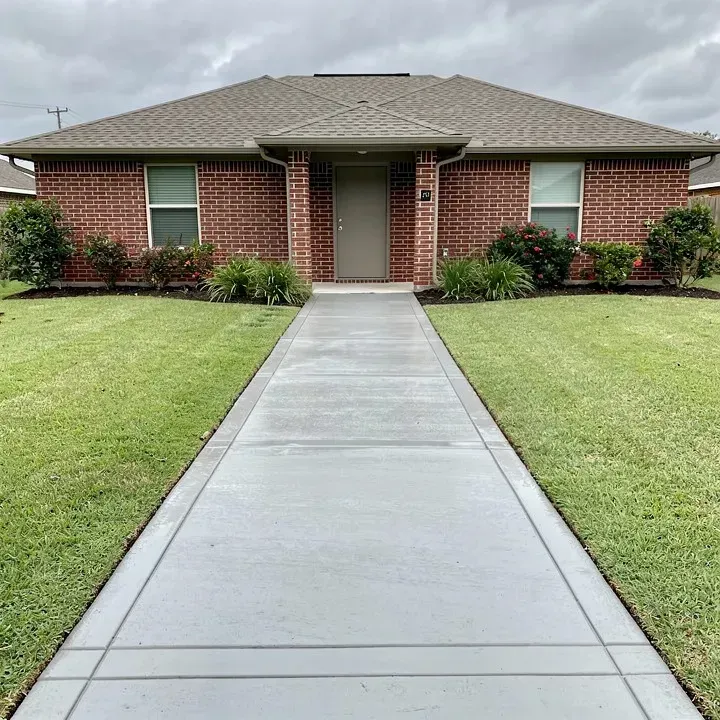
We install and replace concrete sidewalks for homeowners in Marrero and the surrounding West Bank area. From front walkways connecting your driveway to your front door to full sidewalk replacements along the street, we pour clean, level slabs that stay safe and intact through South Louisiana's wet seasons.
20+
Years of Experience
450+
Jobs Done
4.9/5
Average Customer Rating
What Is a Concrete Sidewalk?
A concrete sidewalk is a poured slab pathway that connects areas of your property, whether that is your driveway to your front door, your backyard gate to a side entrance, or your home to the street. Homeowners choose concrete for walkways because it is durable, low maintenance, and provides a safe, stable surface that holds up to foot traffic and weather exposure year after year.
A properly installed concrete sidewalk also improves the appearance of your property, creates a clean defined path through your yard, and eliminates the mud, erosion, and uneven ground that comes with unpaved alternatives.
Who Needs a Concrete Sidewalk?
Any homeowner with a cracked, sunken, or uneven walkway is a candidate for a sidewalk replacement. Uneven concrete is a genuine tripping hazard, especially for children and older family members, and in some cases it can create liability issues if someone is injured on your property.
New sidewalk installations are also common when homeowners add a driveway, build a new entrance, or simply want to improve the accessibility and appearance of their property. If you are selling your home, a clean front walkway is one of the first things a buyer notices and one of the easiest improvements you can make to boost curb appeal before listing.
Putting off a deteriorating sidewalk repair has real consequences. Cracks allow water to penetrate the base, weakening the ground beneath the slab and accelerating the rate of deterioration. In South Louisiana where rainfall is frequent and the ground is saturated for much of the year, this process moves quickly. A small crack that could have been addressed with a simple repair can turn into a full replacement job within a season or two if water is allowed to work its way underneath unchecked.
How a Concrete Sidewalk Installation Works
The process starts with marking out the path and dimensions of the sidewalk. The existing surface, whether grass, soil, or old concrete, is removed and the ground is excavated to the appropriate depth.
A compacted gravel base is laid to provide stable support and promote drainage beneath the slab. Wooden or metal forms are set along the edges to define the width and alignment of the walkway. Steel reinforcement is placed inside the forms before the pour begins.
The concrete is poured, spread, and finished to the specified texture. Expansion joints are placed at regular intervals to allow the slab to move with temperature changes without cracking across the surface. The sidewalk is then left to cure, with a minimum of 24 to 48 hours before light foot traffic.
What Influences the Cost of a Concrete Sidewalk?
The length and width of the sidewalk are the most straightforward cost factors. A longer or wider path requires more material and more labor, and cost scales accordingly. Site conditions play a significant role as well. A straightforward straight path across a flat yard is quicker and less expensive to form and pour than a curved or multi-section walkway that requires more precise forming work. If the existing ground requires significant excavation or if old concrete needs to be removed and disposed of, those steps add to the overall cost.
The finish you choose also affects the price. A standard broom finish is the most affordable and most common choice for sidewalks. Decorative finishes like stamped patterns or exposed aggregate are available at additional cost. Finally, accessibility and how easy it is to get equipment and materials to the work area factor into the time and labor required for any sidewalk project.
Frequently Asked Questions
How thick should a concrete sidewalk be?
A standard residential sidewalk is typically poured at 4 inches thick, which is sufficient for foot traffic and light use. If the sidewalk will also serve as a surface that vehicles occasionally cross, such as a path that crosses a driveway apron, a thickness of 6 inches with additional reinforcement is the safer choice. We assess your specific situation before recommending a thickness so the slab is built for how it will actually be used.
Can a sunken or uneven sidewalk section be repaired instead of replaced?
In some cases yes, but it depends on the cause and extent of the damage. If a single section has sunk due to soil settlement beneath it, mudjacking or slab lifting may be an option. However if the concrete itself is cracked, spalling, or structurally compromised, replacement is the more reliable and cost-effective solution. We give you an honest assessment of both options before any work begins so you can make an informed decision.
How do I prevent my new concrete sidewalk from cracking?
The most important factors are proper base preparation, correct reinforcement, and correctly placed expansion joints. Beyond that, avoid allowing tree roots to grow beneath the slab, as root growth is one of the most common causes of sidewalk lifting and cracking over time. Applying a concrete sealer every few years also helps protect the surface from moisture penetration and extends the lifespan of the slab significantly.
Ready to Get Started on Your Concrete Project?
Whether you are dealing with a cracked driveway, planning a new patio, or concerned about your foundation, we are ready to help. We serve Marrero and the surrounding West Bank communities, and we offer free on-site estimates with no obligation. Give us a call or send us a message and we will get back to you promptly to discuss your project and schedule a time that works for you.

Contact
(504) 384-2379
Mon–Sat: 7am–7pm
Marrero, LA
About Us
Marrero Concrete Works is a locally owned concrete contractor serving Marrero and the greater West Bank area. We handle residential and commercial concrete projects of all sizes, bringing over 20 years of experience and a commitment to quality to every job we take on in South Louisiana.
© Copyright 2026 Marrero Concrete Works. All rights reserved.
© Copyright 2026 Marrero Concrete Works.
All rights reserved.